Expanding a fleet or taking on larger projects may require adding a dozer to your operation. A well-chosen used dozer can be a smart investment, offering reliable performance at a fraction of the cost of new equipment.
However, a used machine can carry hidden costs that may catch you off guard. Unchecked wear from heavy-duty applications and inconsistent maintenance can lead to unexpected downtime and costly repairs. Following a used dozer inspection checklist helps you uncover potential issues and focus on components that support long-term performance.
Learn what to look for when buying a used bulldozer.
1. Check the Hours and Maintenance History
When looking to buy a used bulldozer, hours may be the focus. However, a crucial point is how the equipment accumulated these hours and whether it underwent proper maintenance. Here’s how to review service records.
Verify the Hours Against Wear
Once you know the hours, check that they correlate with what you see in the cab. Modern dozers log machine hours through electronic tracking, but physical inspections reveal actual use.
Look at pedals, joysticks, seat cushions, floor plates and access steps. Smooth pedals with sharp edges and a responsive joystick may indicate lower or well-managed hours. If controls feel loose or polished, the machine may have worked harder than the electronic control module suggests.
Identify Maintenance Gaps
Next, focus on the service log. Fluid and powertrain maintenance should follow a consistent pattern. If the previous owner kept the machine running, you’ll notice consistent upkeep intervals.
Gaps or irregular servicing can create hidden wear inside the engine and hydraulic system.
Inquire About Use History
Maintenance records indicate how the previous owner cared for the machine, while application history shows how they used it. A dozer that worked mostly in sandy soil will have a different wear pattern than one that pushed rock or worked in a quarry. Sand accelerates undercarriage wear, so pay extra attention to the rails and sprockets. Hard rock stresses frames and attachments, so check those areas carefully.
Asking where and how the previous owner used the dozer helps you understand wear patterns and predict which parts may need attention soon.
2. Inspect the Undercarriage
A used dozer undercarriage wear check is one of the most important steps because this system affects traction, efficiency, ride comfort and maintenance costs. Wear on one part affects the others, so looking at it as a whole helps you understand the machine’s useful remaining life.
Pay careful attention to:
Rails and links carry the weight and transfer power. As they wear, the chain pitch changes, affecting sprocket engagement. Look for thinning or uneven spacing along the rails. Advanced wear here affects the whole undercarriage, increasing repair needs if left unchecked.
Sprocket teeth should fit the chain smoothly. Hooked or irregularly shaped teeth may indicate misalignment, excessive wear or past operating conditions that could compromise performance.
Idlers and rollers affect track alignment and load distribution, so their condition influences how evenly the system wears. Check for uneven wear or oil leaks that point to internal wear.
Track tension affects contact pressure and fuel use. Tracks that are too tight or loose speed up wear, while misaligned tracks that rub or drift suggest underlying issues that can affect long-term stability.
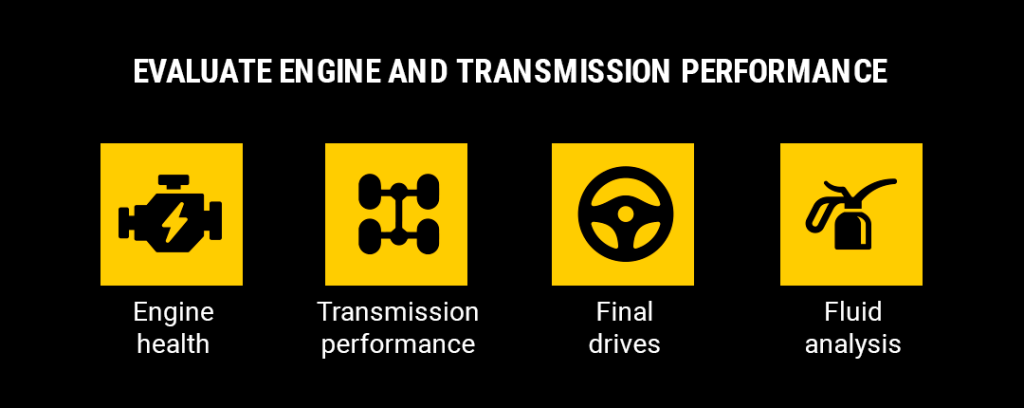
3. Evaluate Engine and Transmission Performance
Another way to inspect a used dozer before buying is to check how it generates and moves power. Evaluate the following:
Engine health: A healthy engine idles steadily and maintains a consistent temperature under load, and the throttle should respond gradually, showing that fuel and airflow are functioning well. Slight shifts in engine tone under load are normal, but harsh or unusual sounds may indicate parts working harder than they should. Watch the exhaust, too. Light, steady smoke usually means the engine is running efficiently, while heavier output can point to injector or airflow issues.
Transmission performance: Once you’ve confirmed the engine runs smoothly, check how the transmission behaves. Gear changes and directional shifts should feel smooth and predictable. Inconsistent shifts or uneven gear response are signs of transmission problems in a used dozer and often reflect wear from past use or missed maintenance.
Final drives: Look at housings and seals for signs of oil leaks, which indicate seal fatigue. Listen for even tones and feel for smooth operation on both sides. Differences can reveal uneven wear or past use on slopes. Healthy final drives help with traction and steering, keeping the machine responsive on the job.
Fluid analysis: Engine, transmission and final drive fluid provide evidence of wear that’s not visible from the outside. Check for clear fluid color, absence of metal particles and minimal contamination. Dark, gritty or burnt-smelling fluids can indicate excessive wear or deferred maintenance. Clean fluids suggest that the previous owner followed service schedules and cared for the machine.
4. Assess the Hydraulic System and Structural Integrity
Hydraulics and structure affect how the dozer handles its main tasks. Check the following:
Cycle times: Blade and ripper movements should be smooth and repeatable. Gradual slowing may indicate internal leaks or pump wear. Consistent cycle times indicate an efficient hydraulic system.
Blade and ripper wear: Inspect blade edges and ripper teeth. Even wear shows balanced operation, while uneven wear can reveal alignment issues or hard use. These observations also show how material loads have stressed the machine.
Structural welds: Examine the welds on push arms, blade mounts and rear attachments. Factory welds are uniform, while extra reinforcement can show where past stress or repairs occurred.
5. Test Dozer Performance
Testing the dozer under actual working conditions confirms whether all the systems work together. Assess how the machine performs under the following scenarios:
Under load: Push material and watch how the dozer handles resistance. Power should remain steady, and the tracks should maintain traction. If the tracks slip, it may indicate an inefficient undercarriage and compromised engine strength.
Steering: Steering should feel smooth, and turns under load should be predictable, with the same response on both sides. Consistent steering makes it easier to control the dozer and may reduce operator fatigue during long days.
Braking: Brakes should engage gradually and securely, even on slopes or when changing directions. Balanced braking reflects proper adjustment and wear, helping you operate safely across different terrain.
Explore Used Dozers From Gregory Poole Equipment Company
Gregory Poole Equipment Company has over 70 years of experience providing reliable used dozers for contractors, fleet owners and operators across eastern North Carolina. We offer a wide selection of equipment from Caterpillar and other leading manufacturers.
Through a robust parts distribution network, technical expertise and several locations throughout the region, we help you optimize uptime. We continue that support with maintenance agreements, inspections, diagnostics and repairs. Our financing options allow you to align equipment decisions with your operational needs and cash flow.
Fill out this form below, and we will get back to you within 1 to 2 business days! Alternatively, give us a call at 8004517278.
CONTACT US
Gregory Poole is your authorized Cat® equipment dealer in Eastern North Carolina. We are a one-stop shop for all your local heavy equipment needs. At Gregory Poole, we carry new, used, and rental equipment for a wide range of industries, including Construction, Agriculture, Marine Power, Electric Power Generation, Trucks, and more. We also provide all our customers with reliable service and support to keep your equipment running at its best.
Interested in learning more about our products and services? Call us at (866) 948-8988 or fill out the contact form below and we will get back to you within 1 to 2 business days!