
A la hora de comprar una miniexcavadora, suele dar prioridad a parámetros como la potencia, la profundidad de excavación y los tiempos de ciclo. Pero el rendimiento solo importa si tu equipo de trabajo está a salvo. Una sola lesión de un operario puede superar el coste de tu maquinaria, ya que paraliza la producción, da lugar a multas de la OSHA y hace que suban las primas del seguro.
Proteger a tu plantilla también protege tu negocio. Las miniexcavadoras de calidad combinan sistemas de protección integrados con tecnología moderna que previene activamente los accidentes. Esta guía detalla los criterios que debes tener en cuenta para evaluar las características de seguridad de las miniexcavadoras. Aprenderás a inspeccionar maquinaria de segunda mano y a elegir un socio que garantice el funcionamiento seguro de tu flota a largo plazo.
La evaluación de la seguridad comienza antes de acudir a un concesionario o inspeccionar una máquina. Comprender las especificaciones del fabricante, las capacidades nominales y las diferencias entre los equipos nuevos y los de segunda mano sienta las bases para tomar una decisión de compra acertada.
Empieza por comparar las especificaciones de los fabricantes entre las distintas marcas y modelos. Las certificaciones de seguridad, las estructuras de protección y los paquetes tecnológicos varían considerablemente de un fabricante a otro.
Consulta los manuales técnicos y las guías para saber qué características de seguridad debes tener en cuenta a la hora de elegir una miniexcavadora. Algunas vienen de serie, mientras que otras son opciones adicionales. Esta investigación te ayudará a identificar qué modelos cumplen tus requisitos básicos de seguridad antes de acotar tu búsqueda.
El peso, la capacidad operativa y las especificaciones de elevación de una miniexcavadora determinan si puede hacer frente a las condiciones de la obra sin volcar ni sobrecargarse. Una máquina demasiado pequeña obliga a los operarios a sobrepasar los límites de seguridad, mientras que una unidad demasiado grande genera ángulos muertos innecesarios.
Conocer losdiferentes tipos y tamaños de excavadoraste ayuda a elegir la categoría de maquinaria que mejor se adapte a las necesidades de tu proyecto.
La elección entre máquinas nuevas y de segunda mano determina todo el proceso de evaluación de la seguridad. Invertir enminiexcavadoras nuevaste garantiza las certificaciones de seguridad vigentes y la tecnología de protección más avanzada.
Los equipos de segunda mano pueden ofrecer una excelente relación coste-eficacia; soloes necesariosometerlosa una inspección exhaustivapara comprobar que los componentes y sistemas críticos para la seguridad funcionen correctamente. Cualquiera de las dos opciones puede garantizar la seguridad de la máquina, siempre y cuando se compruebe el correcto funcionamiento de todos los dispositivos de protección.
Una vez que haya reducido las opciones en cuanto al tamaño y el tipo de máquina, examine las características de seguridad integradas en la miniexcavadora que protegen a los trabajadores de los riesgos más graves en la obra. Estos sistemas constituyen su primera línea de defensa y deben cumplir con normas federales específicas.
Las estructuras de protección absorben los impactos y protegen en caso de vuelco. Para prevenir los accidentes desde el principio se necesita tecnología de seguridad activa.
Más allá de la protección estructural, las miniexcavadoras modernas incorporan funciones de seguridad activa que ayudan a los operarios a evitar accidentes antes de que se produzcan. Estas tecnologías abordan la realidad de que los errores humanos y los factores ambientales son la causa de muchas lesiones relacionadas con la maquinaria.
Los modelos con giro de cola cero mantienen el contrapeso dentro de la anchura de las orugas de la máquina durante la rotación. Este diseño elimina el riesgo de golpear a los trabajadores o a las estructuras situadas detrás de la cabina. Es fundamental para obras urbanas, trabajos de servicios públicos y cualquier entorno en el que se trabaje cerca de paredes o en zonas de trabajo congestionadas. El radio de giro reducido evita los accidentes por impacto en espacios reducidos.
La visibilidadlimitadaen torno a la maquinariacontribuye en parte a las lesiones por impacto en las obras. Un sistema de cámaras de 360 grados elimina los ángulos muertos alrededor de la máquina, lo que permite a los operarios tener una visión más amplia al girar la pluma o dar marcha atrás. Las alarmas de proximidad emiten una señal acústica cuando la máquina detecta a trabajadores cercanos. Algunas de estas características pasarán a ser de serie a medida queavance la tecnología de la maquinaria de construcción.
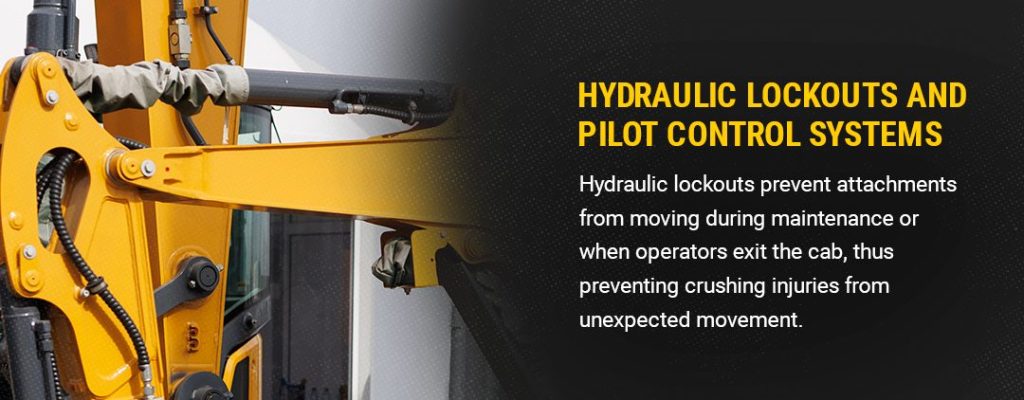
Los bloqueos hidráulicos impiden que los implementos se muevan durante el mantenimiento o cuando los operadores salen de la cabina, evitando así lesiones por aplastamiento provocadas por movimientos inesperados. Los sistemas de control piloto también reducen los movimientos bruscos gracias a su funcionamiento proporcional, lo que proporciona a los operadores un control preciso sobre la posición de la cuchara y el brazo. Además, las funciones de apagado automático evitan que la máquina se desborde si un operador queda incapacitado o necesita salir rápidamente.
Si estás pensando en adquirir maquinaria de segunda mano para ahorrar en los costes iniciales, tu proceso de inspección debe ser minucioso. A la hora de inspeccionar una miniexcavadora para comprobar su seguridad, utiliza esta lista de comprobación detallada para verificar que los sistemas de protección funcionan correctamente.
Da una vuelta alrededor de toda la máquina antes de ponerla en marcha.
No te fíes de lo que te diga el vendedor de que todo funciona: compruébalo tú mismo.
La documentación te permite saber cómo la han tratado los anteriores propietarios de la máquina a lo largo de su vida útil.
Un modelo de calidad te proporciona una base, pero evaluar la seguridad va más allá de la compra inicial. Es necesario que compruebes las características del equipo de segunda mano y que aprendas a mantener el buen funcionamiento de esos sistemas mediante un mantenimiento adecuado y unos procedimientos correctos de acoplamiento.
Los implementos que no se ajusten a la capacidad o a las especificaciones de la máquina pueden provocar fallos catastróficos. El Instituto Nacional de Seguridad y Salud en el Trabajo ha documentado múltiples casos deaccidentes mortales causados por cucharas mal acopladase implementos incompatibles en obras de construcción. Comprueba siempre que estás utilizandoimplementos con las características técnicas adecuadasy que su instalación la realice personal cualificado.
Las decisiones relativas al mantenimiento y la reparación también influyen en la seguridad. Aunque en un primer momento puedas ahorrar dinero comprando recambios no originales, es posible que estos no cumplan las normas técnicas que garantizanlos componentes originales del fabricantepara los sistemas críticos. Una tubería hidráulica o un componente de los frenos defectuosos ponen en peligro a los operarios. Seguirel programa de sustitución y mantenimientodel fabricante con recambios de calidad es una inversión, no un gasto.
Ahora que ya sabes qué características de seguridad debes tener en cuenta en las miniexcavadoras, necesitas un socio que comprenda que la fiabilidad de una máquina depende en gran medida del servicio técnico que la respalda. Al trabajar con nosotros, en Gregory Poole Equipment Company, tendrás a tu disposición equipos especializados que te ayudarán a mantener tu maquinaria en funcionamiento de forma segura y eficiente.
Desde hace más de 70 años, somos el distribuidor de confianzade Cat®en el este de Carolina del Norte. Ofrecemos miniexcavadoras nuevas y de segunda mano certificadas, con el respaldo de recambios originales, técnicos experimentados y opciones de financiación flexibles. Caterpillar es una elección acertada, tanto si eliges un modelo nuevo como de segunda mano.Ponte en contacto con nuestro equipooconsulta las opciones de financiaciónpara dar el primer paso.