
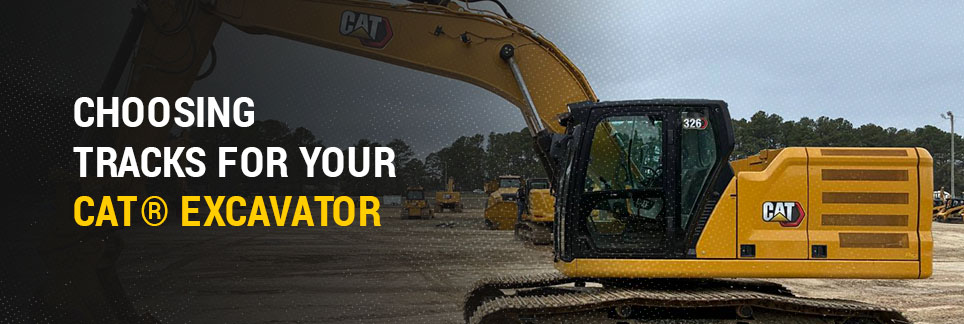
Las orugas soportan todo el peso operativo de tu excavadoraCat®en condiciones de terreno exigentes. Cada pasada sobre barro, rocas o escombros transmite la fuerza a través de las orugas antes de que esa tensión llegue al tren de rodaje y al bastidor.
Cuando la elección de las orugas no se adapta a las condiciones de la obra, el rendimiento disminuye. Es posible que notes una menor tracción, una velocidad de desplazamiento más lenta y una conducción más irregular, lo que obliga al operador a realizar más correcciones. Estas pérdidas aceleran el desgaste, aumentan los intervalos de reparación y suponen una mayor carga para tu presupuesto de mantenimiento.
A la hora de elegir entre las diferentes opciones de orugas para excavadoras Cat, tanto para terrenos blandos como duros, debes tener en cuenta tanto el tamaño de la máquina como el terreno en el que va a trabajar. Descubre en esta guía algunos consejos para seleccionar el tipo de oruga adecuado.
El tren de rodaje representa una parte importante de los costes de mantenimiento a lo largo de la vida útil de una excavadora. Saber cómo elegir las orugas adecuadas para una excavadora Cat te ayuda a gestionar el desgaste antes de que una sustitución prematura aumente los costes de propiedad. Elegir las orugas adecuadas se traduce en menos tiempo de inactividad durante el mantenimiento de la máquina.
Unas orugas inadecuadas hacen que la excavadora tenga que luchar contra el terreno en lugar de avanzar por él de forma eficiente. En barro profundo, una banda de rodadura de baja agresividad puede resbalar bajo carga, por lo que la tracción hacia delante disminuye antes de que la cuchara termine el corte. Los operadores responden realizando pasadas más cortas y cambiando de posición con mayor frecuencia.
Sobre asfalto o suelo compactado, una banda de rodadura demasiado agresiva puede provocar vibraciones en la superficie, lo que hace que la potencia del motor se desperdicie en vibraciones en lugar de destinarse al trabajo hidráulico productivo. El consumo de combustible aumenta a medida que aumenta la resistencia. Las rocas afiladas pueden desgarrar el caucho y el deslizamiento constante puede acelerar el desgaste de las orugas; ambos factores pueden reducir el tiempo de actividad.
El material de las orugas influye en la durabilidad, el rendimiento de la máquina y el impacto sobre la superficie. Las orugas de goma recubren correas de acero o núcleos de acero incrustados con un compuesto flexible, lo que permite equilibrar la resistencia al desgaste con la movilidad. Las orugas de acero utilizan eslabones metálicos y tacos que entran en contacto con el suelo, lo que proporciona un soporte rígido para operaciones con gran peso o alto par motor en entornos exigentes.
La elección del material adecuado para las orugas garantiza la estabilidad de la máquina, protege las superficies y se ajusta a los requisitos operativos.
Las orugas de goma proporcionan una conducción más suave y silenciosa, lo que mejora la comodidad del operario en la obra. Las máquinas se desplazan con mayor suavidad sobre suelo blando, superficies pavimentadas e incluso en terrenos ligeramente accidentados.
Las orugas de goma, de gran durabilidad, limitan los dañosen el asfalto, el hormigón y las zonas ajardinadas, manteniendo intactas las superficies acabadas. La amortiguación incorporada en el diseño de las orugas reduce la tensión en el tren de rodaje, lo que prolonga su vida útil.
Las orugas de goma suelen:
Las orugas de acero ofrecen un rendimiento óptimo en obras con rocas afiladas o escombros de demolición que podrían dañar el caucho. Este material resiste superficies abrasivas, como las graveras o los suelos de las canteras. El acero puede soportar temperaturas extremas, tanto de calor como de frío, sin perder resistencia estructural.
Las orugas rígidas distribuyen uniformemente el peso de la máquina, lo que proporciona una tracción constante en terrenos sueltos o irregulares. Los eslabones reforzados y los robustos sistemas de bloqueo mantienen las articulaciones de la máquina bien fijadas ante impactos repetidos.
Las vías de acero son muy recomendables para:
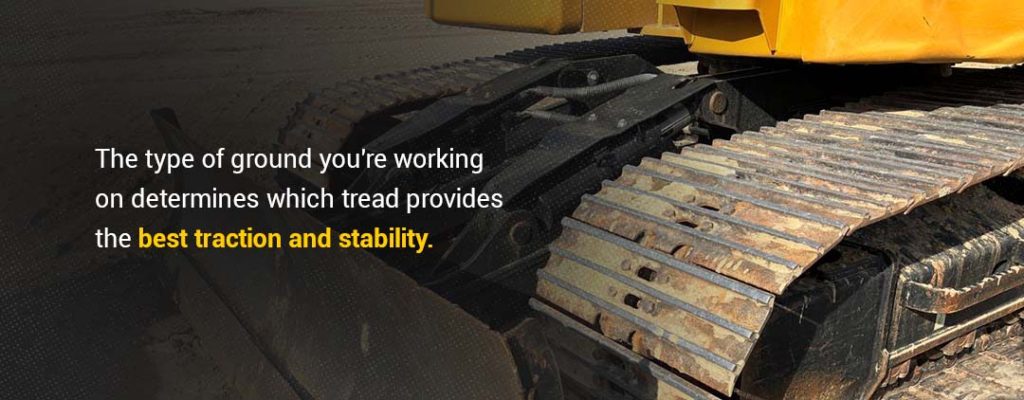
El tipo de terreno en el que se trabaja determina qué banda de rodadura ofrece la mejor tracción y estabilidad. Los operarios deben evaluar las superficies principales en las que trabajan con mayor frecuencia, como la tierra, el asfalto o el terreno mixto.
La elección adecuada de la banda de rodadura garantiza un funcionamiento fluido y un agarre constante. Las configuraciones para excavación reducen el deslizamiento en terrenos blandos, mientras que las configuraciones de recorrido largo resisten el desgaste en superficies firmes. Las opciones intercambiables permiten adaptarse a las condiciones estacionales y a las variaciones del terreno, lo que garantiza la fiabilidad de las máquinas.
La flotación ayuda a mantener la movilidad sobre superficies blandas. Las orugas más anchas distribuyen el peso de la excavadora sobre una superficie mayor, lo que reduce la presión sobre el suelo y evita que la máquina se hunda. Los dibujos de las orugas, ya sean de barras rectas o de perfil agresivo para lodo, proporcionan autolimpieza y tracción, lo que permite que la máquina siga avanzando en lodo o arena.
Los dibujos específicos para invierno mantienen el agarre sobre la nieve o el suelo mojado. Las orugas bien flotantes reducen los surcos y las huellas profundas. Los dibujos todoterreno facilitan el desplazamiento de las máquinas entre terrenos saturados y terrenos más firmes.
En terrenos pantanosos o con características de marisma, las orugas de gran superficie de flotación, junto con los elementos sellados del tren de rodaje, ayudan a proteger los componentes internos.
Las superficies abrasivas, como el asfalto, la roca a la vista y los escombros de hormigón, desgastan rápidamente las orugas estándar, lo que reduce su vida útil. Los materiales duros o con púas cortan y desgarran la banda de rodadura, lo que exige soluciones más resistentes para mantener un rendimiento constante.
Los diseños de banda de rodadura de caucho con múltiples barras proporcionan tracción en carreteras asfaltadas y reducen las vibraciones en comparación con los diseños de tacos agresivos, lo que permite un funcionamiento más suave sobre superficies pavimentadas. Las orugas diseñadas para largas distancias sobre superficies duras utilizan cordones de acero o compuestos de caucho especializados para resistir la acumulación de calor y la separación.
El trabajo en pendientes requiere unos dibujos de la banda de rodadura que maximicen la tracción para evitar deslizamientos. Las orugas con núcleo reforzado ayudan a mantener el contacto con el suelo en las pendientes y favorecen un posicionamiento estable de la máquina.
Los sistemas de orugas diseñados para terrenos difíciles ayudan a mantener la tracción sobre suelo suelto, grava y subbase compactada, al tiempo que resisten el descarrilamiento bajo distintos ángulos de carga. Las orugas de eslabones de acero o de goma con refuerzos de acero ofrecen durabilidad en superficies irregulares sin comprometer la estabilidad.
Las siguientes características facilitan la conducción por terrenos irregulares y pendientes difíciles:
El tamaño de la máquina determina qué tipo de orugas necesita tu excavadora Cat. La anchura, el paso y el número de eslabones deben coincidir con el tren de rodaje para garantizar un ajuste y una tensión adecuados.
Las máquinas de oruga pequeñas y compactas suelen utilizar orugas de goma, mientras quelas excavadoras Cat pequeñas de los modelos 311-317pueden utilizar orugas de acero. Las excavadoras hidráulicas de gran tamaño pueden funcionar con sistemas de orugas de acero diseñados para ofrecer una mayor durabilidad. Algunos trenes de rodaje Cat permiten cambiar entre orugas de uso general y de uso intensivo dentro de la misma clase de tamaño.
Las cargadoras compactas sobre orugas y las miniexcavadoras cuentan con orugas de goma especializadas para desplazarse por diferentes tipos de superficie, lo que les confiere versatilidad a la hora de alternar con frecuencia entre terrenos de tierra y pavimento:
Las excavadoras Cat de tamaño medio y grande ejercen una fuerza descendente enorme, por lo que requierentrenes de rodaje de acero de alta resistencia paratrabajosde producción. Las orugas de acero resisten condiciones adversas y cargas de alto impacto. La elección entre el modelo de uso general y el de alta resistencia depende de las horas anuales previstas y del tiempo que se vaya a pasar en condiciones severas o abrasivas:
Mantener el ajuste correcto de las orugas prolonga la vida útil de los componentes del tren de rodaje y reduce la carga sobre el sistema hidráulico y el motor. Una alineación y una tensión adecuadas mantienen la máquina estable, garantizan un desplazamiento predecible y evitan esfuerzos innecesarios durante la excavación o las maniobras. Ten en cuenta los siguientes consejos:
Con más de 70 años de experiencia como distribuidor de confianza de Cat, Gregory Poole Equipment Company ofrece una selección de orugas de goma para maquinaria pesada y piezas para el tren de rodaje, junto con un servicio técnico especializado en orugas, para que su máquina siga funcionando en condiciones abrasivas. Nuestra opción de servicio en un plazo de dos días ayuda a los contratistas de todo el este de Carolina del Norte a mantener el tiempo de actividad y recuperar rápidamente su productividad.
Nuestro equipo de expertos técnicos puede asesorarle a la hora de elegir las orugas adecuadas, protegerlas contra el desgaste y mejorar la eficiencia general en el trabajo.Póngase en contacto con nosotros hoy mismopara comentarnos sus necesidades en materia de orugas, descargue nuestraGuía de equipos con orugas de gomaobusque un punto de ventacerca de usted.